One continuous descent — from the sunlit skin of the sea to the floor of the
Challenger Deep, 10,935 metres below. No cuts. No coming up for air.
Begin descent
69°N chart datum · rendered live in WebGL
Chapter 01 — Epipelagic · 0–200 m
The ocean averages 3,688 metres deep. Sunlight surrenders at one thousand. What remains
is the largest living space on Earth — and we have charted less of it than the surface of Mars.
Chapter 02 — Mesopelagic · 200–1,000 m
The twilight ledger
0%
of surface light survives to 1,000 metres — the edge of vision
0%
of the ocean's volume lies in permanent, absolute darkness
0%
of deep-sea animals make their own light — they are bioluminescent
Chapter 03 — Bathypelagic · 1,000–4,000 m
Down here, light is not given. It is made — flashed, pulsed and thrown
by bodies that have never once seen the sun.
Field notes · Bathyal Survey V · 03:12 ship time
Chapter 04 — Specimen plates · trawl logI / IV
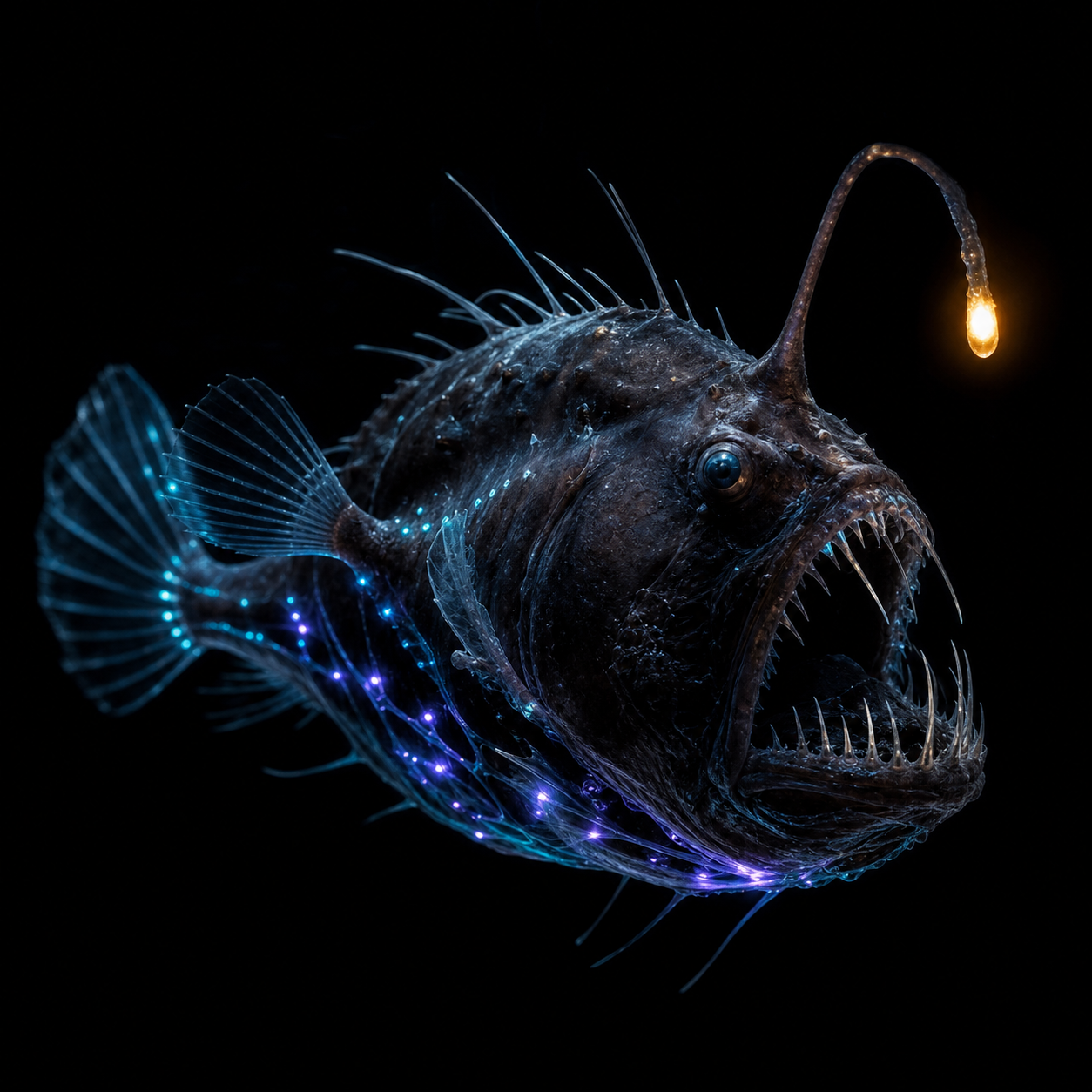
PLATE I
Melanocetus johnsonii
Humpback anglerfish
DEPTH1,000–4,500 MLENGTH18 CMLIGHTESCA · AMBER
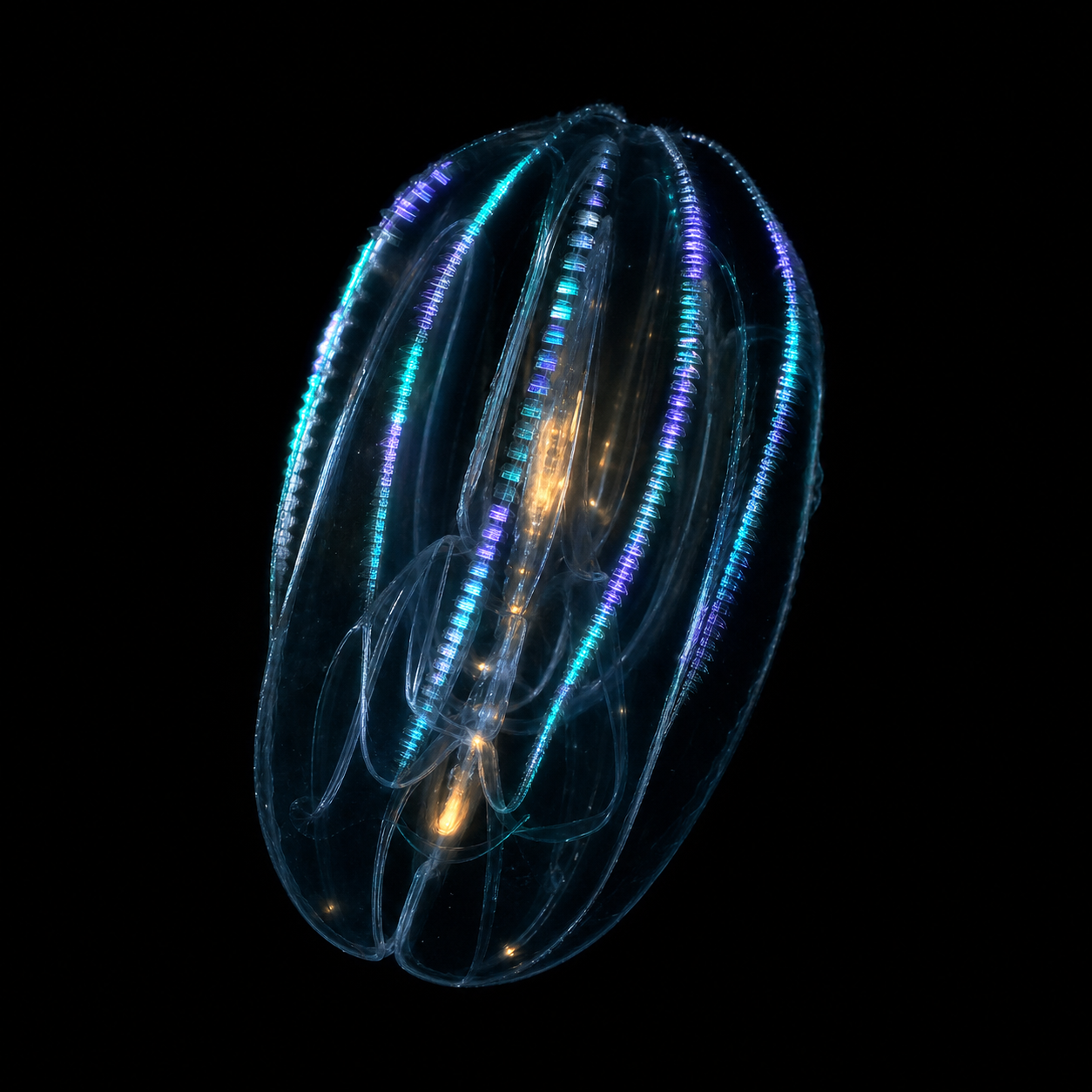
PLATE II
Bathocyroe fosteri
Iridescent comb jelly
DEPTH200–1,000 MLENGTH5 CMLIGHTCILIA · SPECTRAL
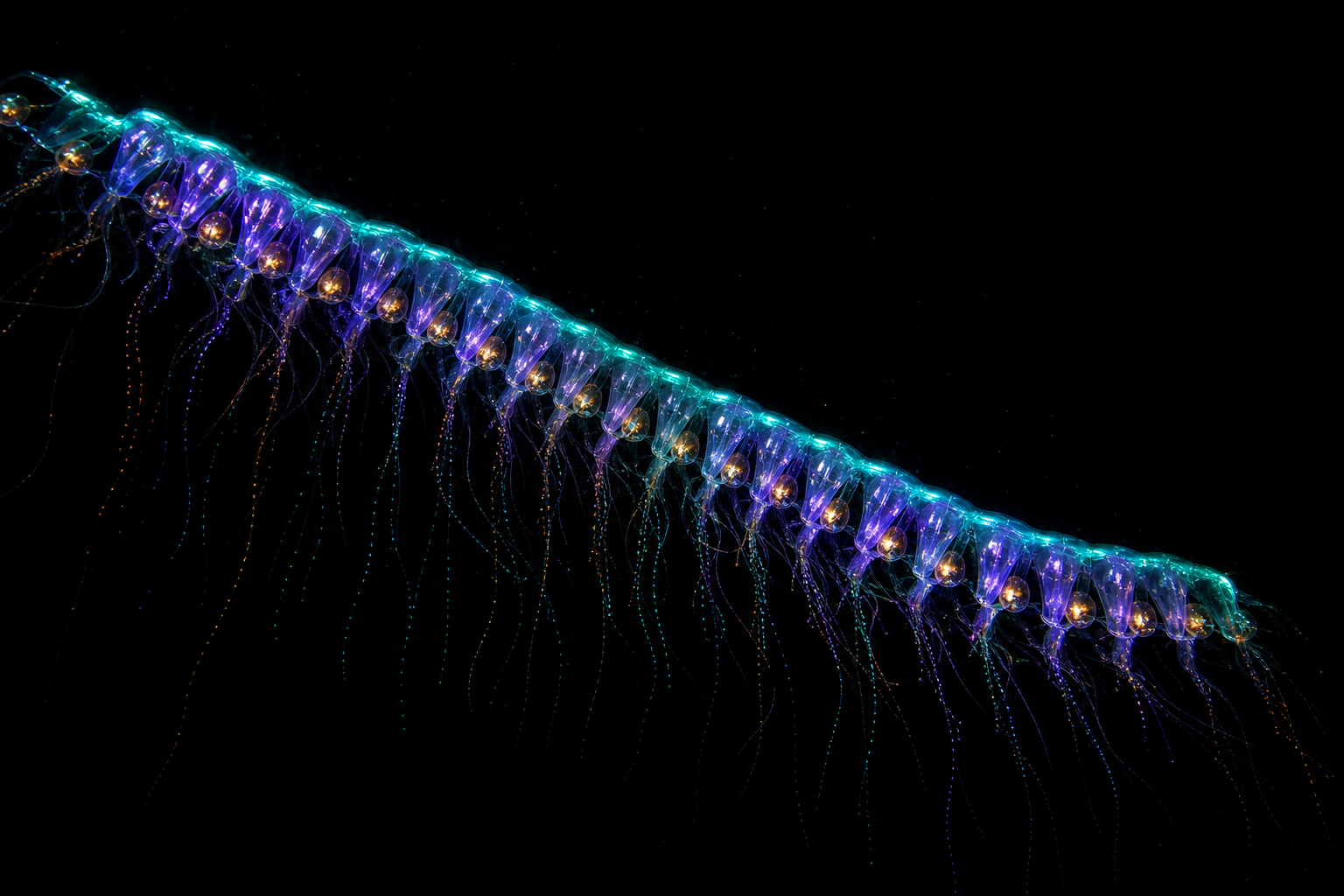
PLATE III
Praya dubia
Giant siphonophore
DEPTH700–1,000 MLENGTHTO 40 MLIGHTZOOIDS · CHAIN
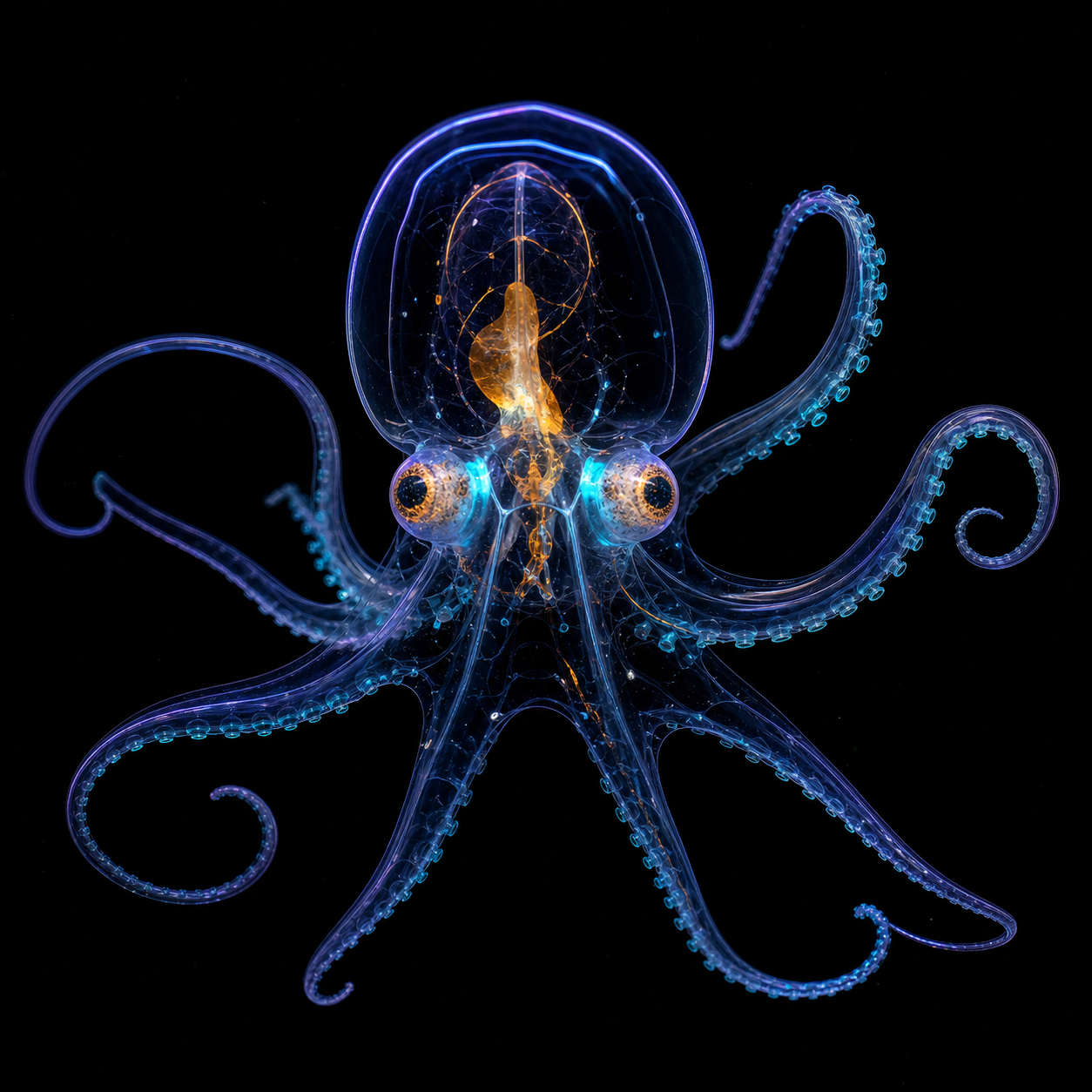
PLATE IV
Vitreledonella richardi
Glass octopus
DEPTH600–900 MLENGTH11 CMLIGHTRIM · VIOLET
Chapter 05 — Abyssopelagic · 4,000–6,000 m
0bar
pressure on the abyssal plain
The water presses with the weight of fifty jumbo jets balanced on a human body.
Life answers by becoming glass, gel and light — soft enough that the pressure
can find nothing to break.
hadal · from Hadesthe water below 6,000 mnamed for the unseenhadal · from Hadesthe water below 6,000 mnamed for the unseen
Chapter 07 — Hadal · 6,000–10,935 m
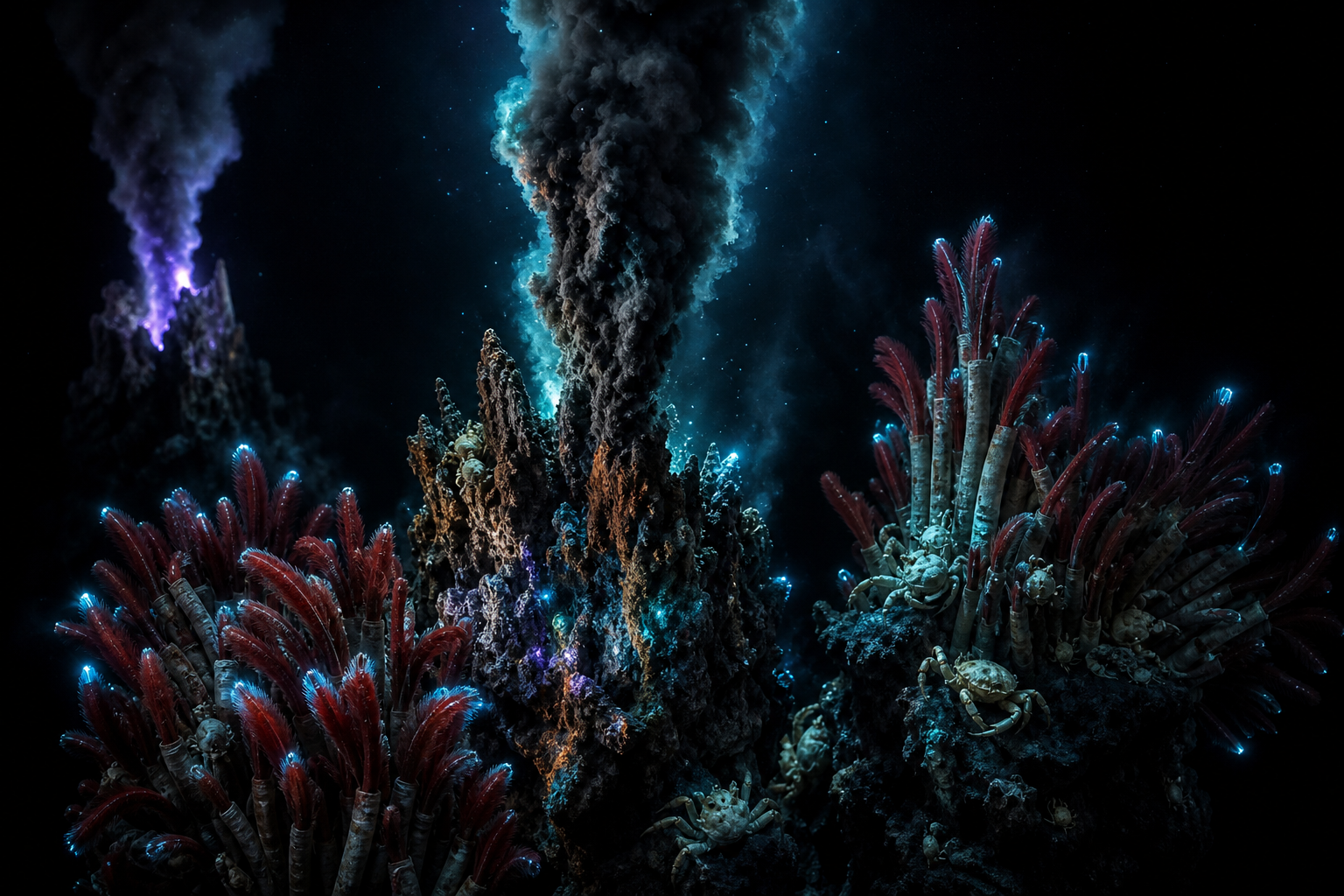
FIG. 07 — HYDROTHERMAL VENT FIELD · 2,400 M AND BELOW
0metres
Challenger Deep
Everest, submerged at the bottom of the trench, would still drown beneath two kilometres of water.
Fire in the dark
Vent fluid leaves the crust at 400°C — and entire ecosystems feed on its chemistry, eating the Earth instead of the sun.
The floor
The descent ends here. The water above you is eleven kilometres tall. Everything that falls, falls for years.